What is a web3 wallet?

A web3 wallet lets you hold crypto assets and connect to blockchain applications without handing control to a third party. Here’s how they work, what types exist, and what to watch out for.
On this page
What is a web3 wallet?
A web3 wallet is software that lets you interact with blockchain networks directly. It stores the cryptographic keys that prove control over your assets and lets you connect directly to decentralized applications.
The term “Web3” is usually used for blockchain-based apps, tokenized assets, and decentralized protocols. In that context, a web3 wallet is the basic tool you need to participate: without one, you cannot hold on-chain assets or use most decentralized applications.
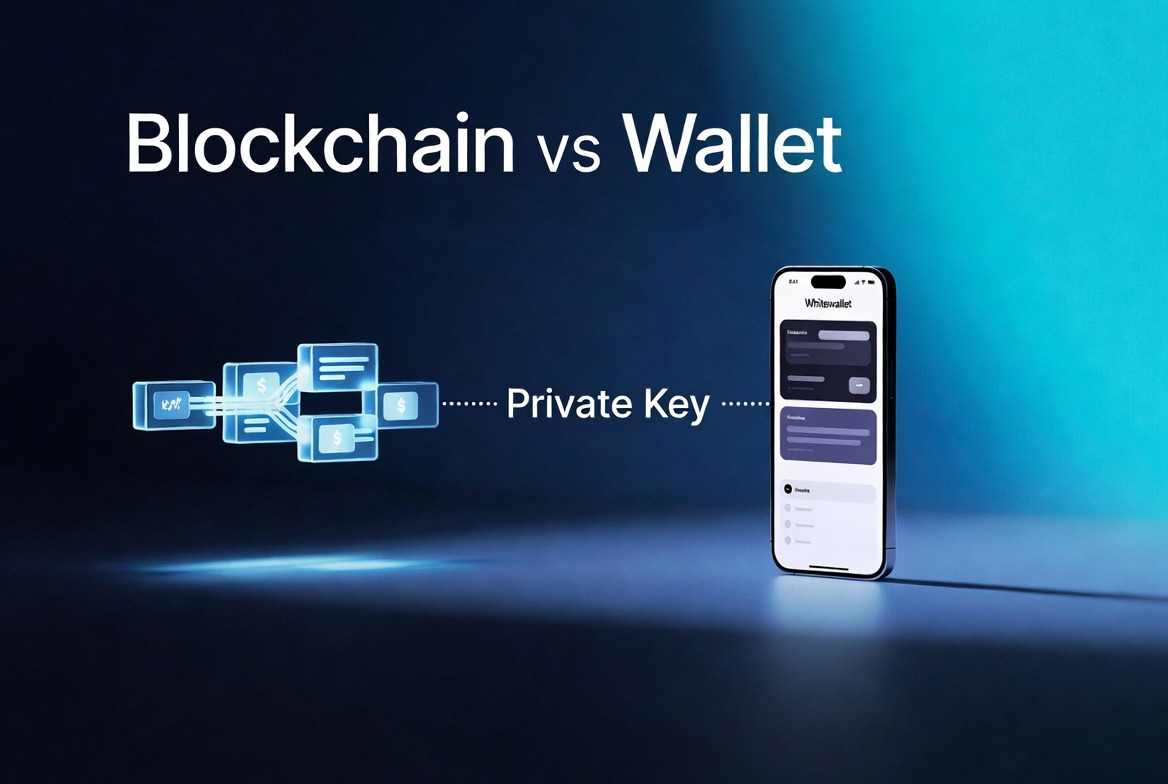
One point often causes confusion: the wallet does not store the assets themselves. What the wallet holds are your private keys – the cryptographic credentials that authorize transactions on your behalf. Whoever controls those keys controls the assets. That’s why key management is the central concern in wallet design, and why the phrase “not your keys, not your coins” gets repeated so often in the space.
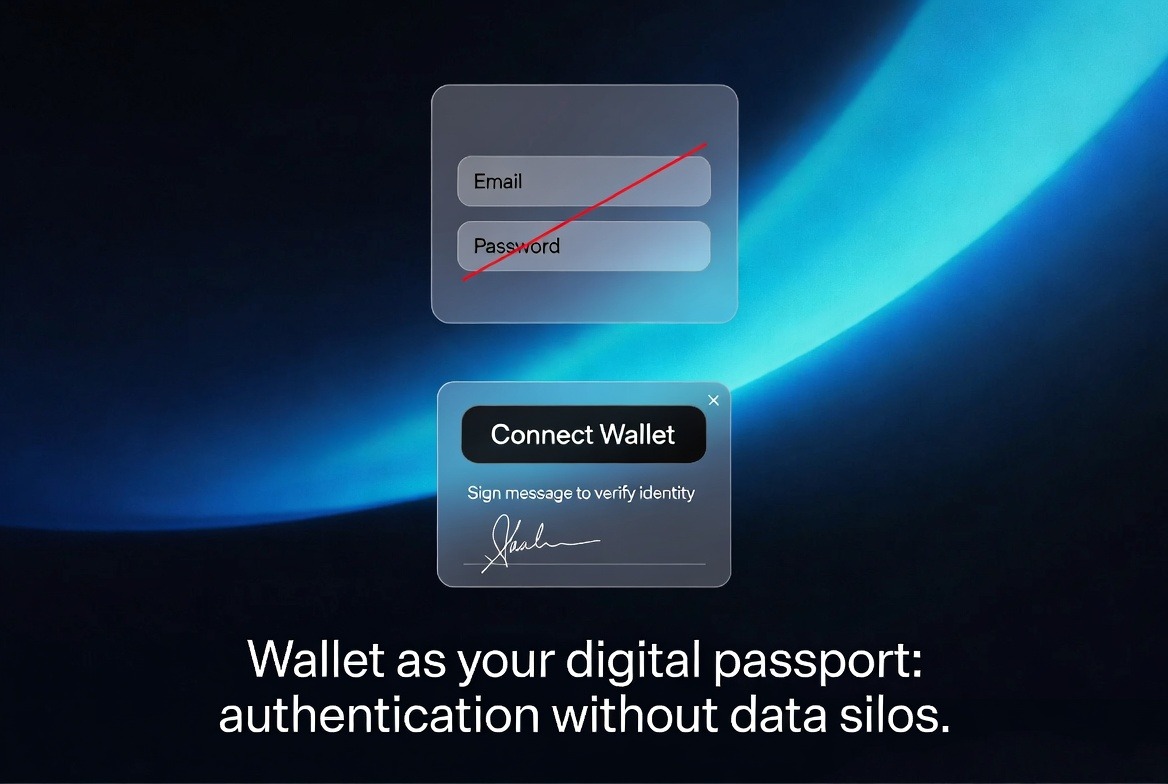
When you connect a web3 wallet to an application, the wallet acts as your identity layer. Instead of logging in with an email and password, you authenticate by signing a message with your private key. The application verifies the signature, confirms your address, and grants access. There is no standard account setup or password reset flow, and in many cases you do not need to hand over personal data.
Types of web3 wallets explained
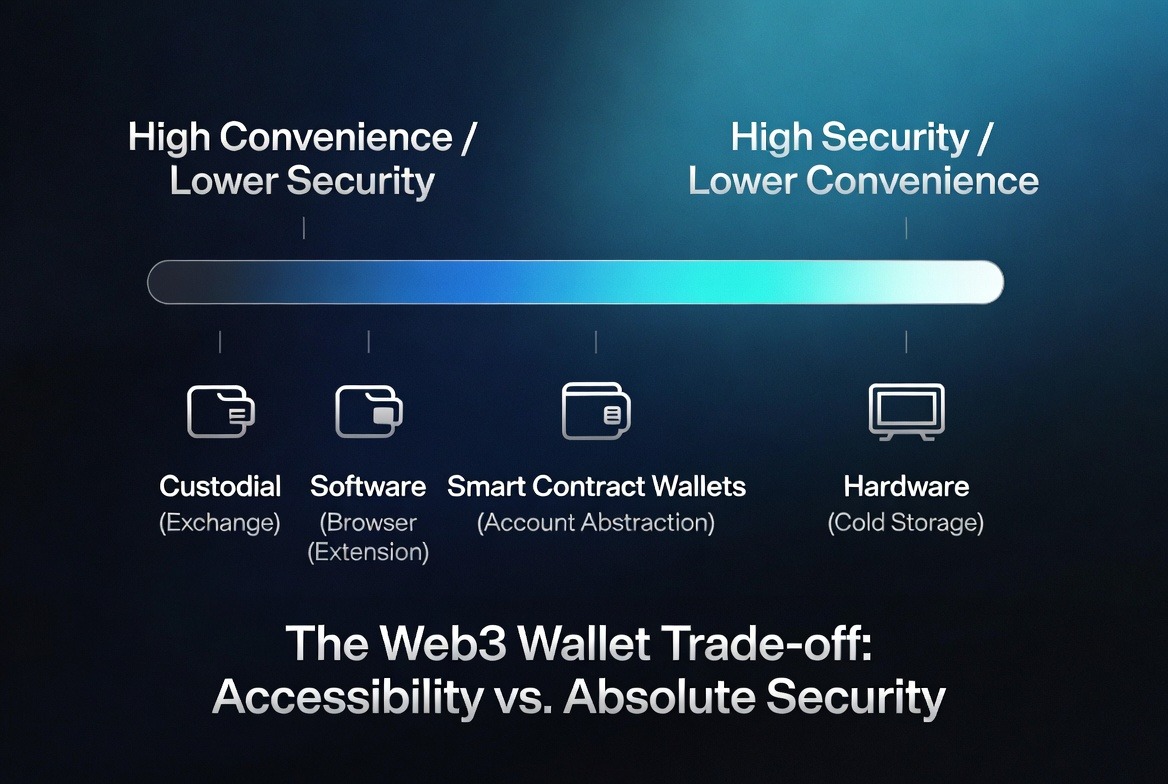
To understand what is web3 wallet is in practice, it helps to know that the term covers several different products with different security and usability profiles.
Software wallets run as browser extensions, mobile apps, or desktop applications. MetaMask, Phantom, Whitewallet, and Rainbow are examples. They’re the most common entry point into Web3 because they’re free, easy to install, and connect directly to dApps in the browser. The trade-off is that private keys are stored on a device connected to the internet, which makes them more exposed to malware and phishing attacks than offline alternatives.
Hardware wallets store private keys on a dedicated physical device that never connects directly to the internet. Ledger and Trezor are the most widely used. When you sign a transaction, the signing happens on the device itself, so the private key is never exposed to the host computer. They’re meaningfully harder to compromise remotely, but they add friction to every transaction and cost money upfront.
Browser-based wallets operate entirely within a web interface without requiring any installation. They’re convenient for occasional use but generally considered less secure, since keys may be generated and stored in the browser environment.
Smart contract wallets replace the standard private key model with programmable account logic. They can support features like multi-signature approval, social recovery, and spending limits. Account abstraction has made this category more viable, though it adds complexity and dependency on the underlying contract code.
Custodial wallets, offered by exchanges like Coinbase or Binance, manage keys on the user’s behalf. Technically these are not self-custody web3 wallets in the traditional sense: you’re trusting the platform to hold and secure your assets. They’re easier to use and easier to recover if you forget a password, but you don’t control the keys directly.
Key features and uses of web3 wallets
A web3 wallet does more than just hold assets.
Holding and transferring assets. The most basic function: receive crypto to your address, send it to others, and track your balances across tokens and networks. Most wallets now aggregate balances across multiple chains in a single view.
Connecting to decentralized applications. Through WalletConnect or browser extension APIs, wallets authorize your interactions with DeFi protocols, NFT marketplaces, on-chain games, and governance platforms. The wallet handles transaction signing; the application handles the logic.
Swapping tokens. Many wallets include built-in swap functionality, either through a native interface or by routing through a DEX aggregator. This lets users exchange tokens without leaving the wallet or connecting to a separate exchange.
Staking and yield. Some wallets provide direct access to staking protocols and yield products, letting users deposit assets into liquidity pools or validator nodes from within the wallet interface.
Cross-chain bridging. As multi-chain usage has grown, wallets have added native bridging tools that move assets between networks without requiring users to navigate a separate bridge interface. Whitewallet, for example, supports native bridging between Whitechain, Ethereum, and TRON directly within the app.
Identity and authentication. Increasingly, web3 wallets function as portable identity credentials. Signing a message with your wallet address proves ownership without revealing personal information, which makes it useful for gaining access to token-gated communities, governance systems, and credentialing platforms.
Pros and cons of web3 wallets
A web3 wallet gives the user direct control over their keys and transactions without depending on a bank, exchange, or other central platform. Access to DeFi protocols is open to anyone with a wallet and an internet connection.
That control also comes with real usability challenges.
Key management falls entirely on the user. Lose your seed phrase and access is gone permanently. There’s no password reset, no support ticket, no recovery path through a central authority. This shifts responsibility in a way that most users outside the crypto space are not accustomed to.
Phishing is a persistent risk. Web3 wallets are a high-value target, and attackers regularly create fake dApp interfaces, malicious browser extensions, and deceptive transaction requests designed to trick users into signing away their assets. The wallet itself provides no protection against a user who approves a malicious transaction.
The interface gap between web3 wallets and conventional financial apps remains real. Wallet addresses are long hexadecimal strings, transaction confirmation screens can be difficult to interpret, and gas fees add a layer of complexity that has no equivalent in traditional payments.
Hardware wallets reduce remote attack risk but require physical security in return. A hardware wallet that is lost or damaged without a seed phrase backup leaves no recovery path.
For anyone who wants self-custody, a web3 wallet is usually the starting point. But the trade-offs are real: more control means more responsibility, and mistakes are often hard to reverse.
Articles by this author