Stablecoin card spending jumps 500% to $600M; Visa handles 90%

Stablecoin-linked card spending rose 500% since Sept. 2024 to about $600 million monthly, with Visa processing roughly 90% of those on-chain card transactions.
Stablecoin-linked card spending climbed about 500% from September 2024 to roughly $600 million per month, according to industry transaction tracking. Visa processed an estimated 90% of those on-chain card transactions; in March the company handled about 97% of reported crypto card volume.
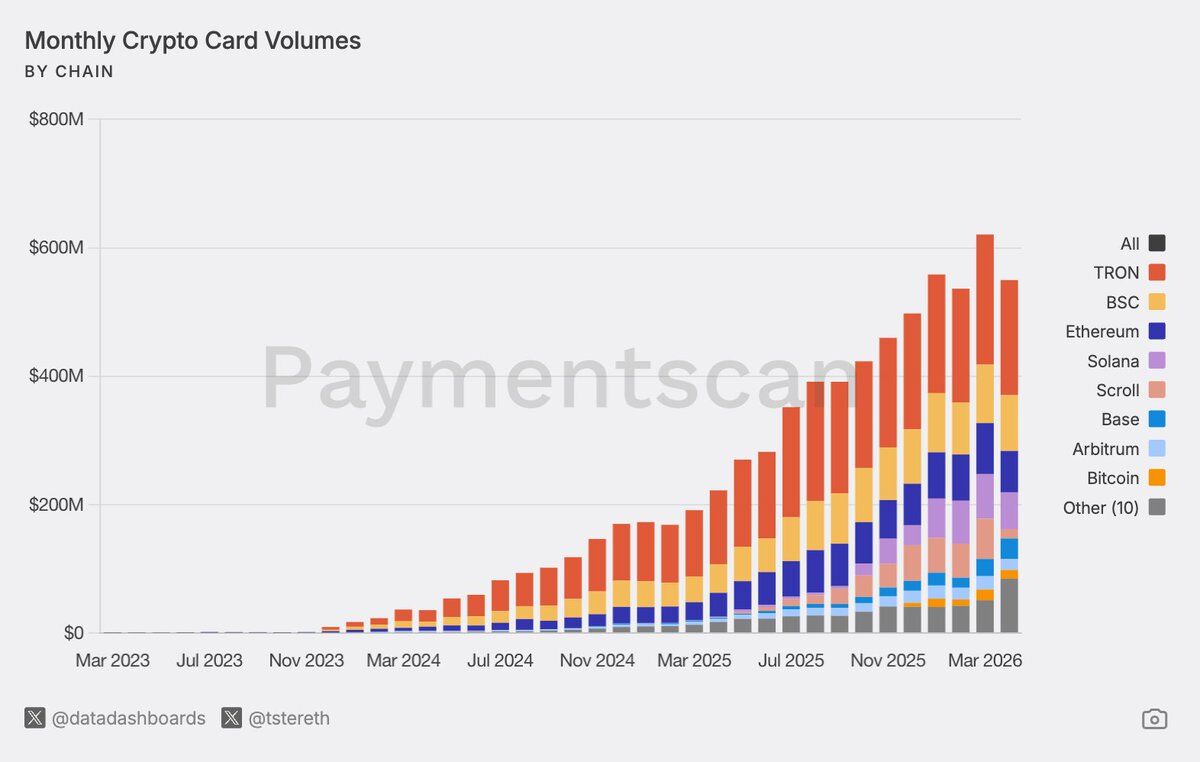
The increase reflects a change in how consumers use stablecoins. Rather than remaining in blockchain wallets, stablecoins are increasingly spent through debit and prepaid cards that settle on traditional payment rails.
Transaction data show notable month-over-month spikes in April and continued geographic expansion of card programs. Industry trackers report that stablecoin-linked card programs are among the fastest-growing applications on public blockchains.
Visa has expanded its share by partnering with crypto-native infrastructure providers, a strategy that reduces reliance on traditional sponsor banks and speeds integrations. Visa’s Bridge stablecoin card program is slated to roll out into additional markets through 2026. Partner programs such as Wirex are using Visa Direct to route stablecoin payouts onto existing cards.
Newer card issuers are also testing different reward structures. Jupiter’s Solana-based Visa card offers tiered cashback of 4% to 10% that is paid in stablecoins and reported a 660% month-over-month increase in volume in April.
Justin Sun, founder of Tron, characterized the trend as a shift in distribution, writing that crypto cards move stablecoins “beyond wallets into everyday spending at global scale” and support “digital assets integrated directly into how people pay, anywhere.”
Industry commentator Marty Party predicted in a social post that Visa-issued stablecoin cards added to Apple Pay and Android tap payments could onboard 10 million users before many merchants accept native stablecoin settlement, and that the market could reach maturity by 2027.
Analysts and market participants say the future role of stablecoin cards will depend on broader payment network acceptance, merchant settlement options and regulatory developments that affect stablecoin issuance and card processing.
Stablecoins are blockchain tokens typically pegged to fiat currencies and transferable on public ledgers. Card programs link those tokens to traditional payment networks, enabling consumers to spend token balances at merchants that accept Visa or other card networks. Combining crypto-native back-end systems with established card rails moves on-chain assets into retail spending.
Tags
Articles by this author