Managers’ disengagement costs $438B, Gallup reports
Global employee engagement fell from 23% to 21% last year, costing firms about $438 billion as manager engagement-especially among younger and female leaders-declined.
Gallup’s latest global workforce report shows employee engagement fell from 23% to 21% last year. The organization estimates that decline cost companies about $438 billion in lost productivity.
Gallup described the state of employee engagement as a “breaking point.” The report notes engaged workers are more productive, miss fewer days and deliver stronger customer outcomes.
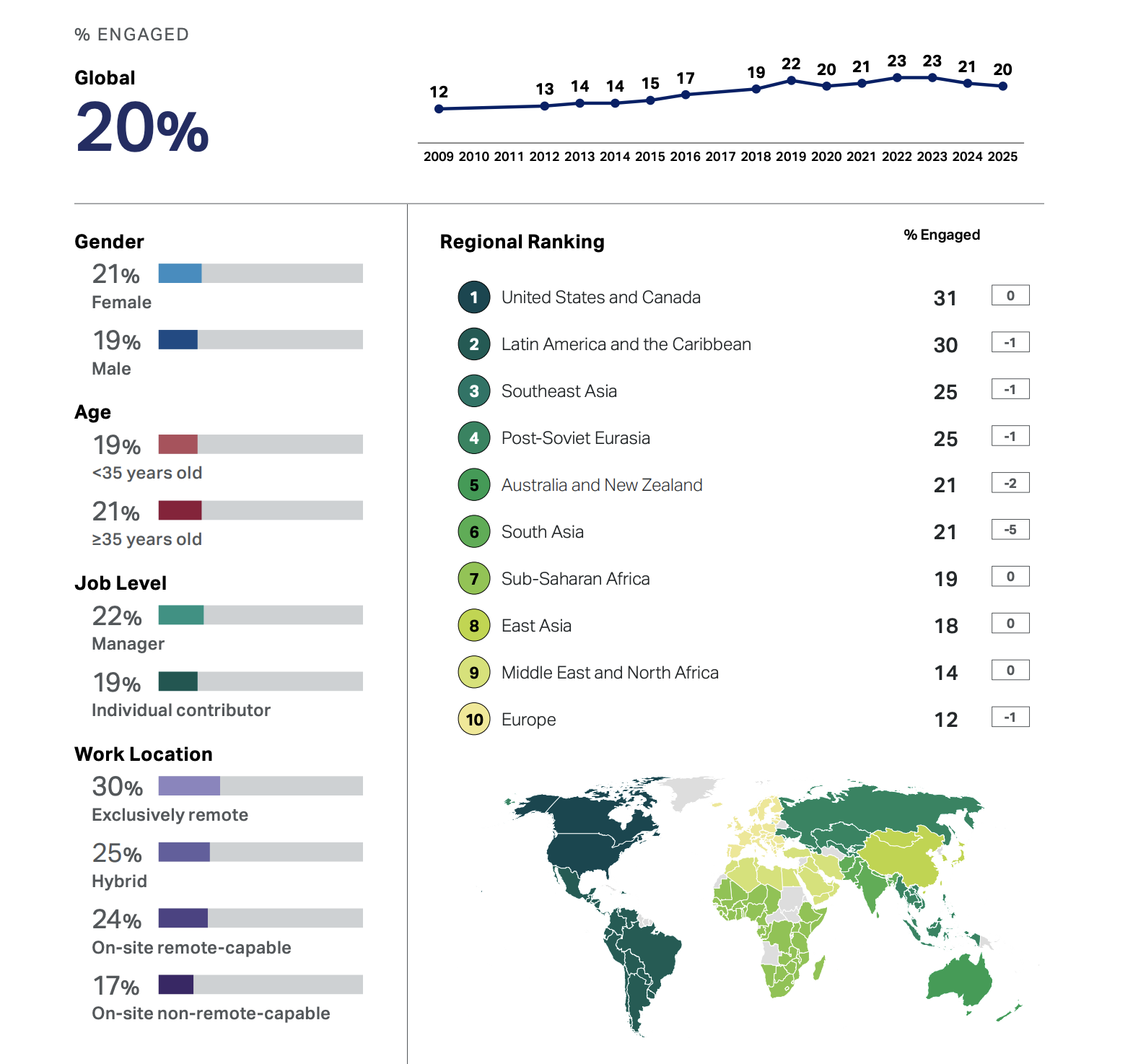
The drop is the second sustained decline since 2009; the previous comparable fall occurred during the COVID-19 pandemic. Gallup’s data cover multiple regions and industries.
Analysts identify several drivers. Companies have cut budgets and staff, markets face geopolitical shocks, and tighter spending has increased job stress. Some employers have reinstated on-site work requirements that add commuting and childcare burdens for certain employees.
Workers report repeated change initiatives that begin with publicity but are later abandoned, leaving processes more complex. Many say they are being asked to do more with fewer resources, which contributes to burnout and frustration.
Workplace coaches and human resources leaders attribute part of the pressure to new technology and artificial intelligence. These tools often increase the speed and complexity of work without matching changes to systems, training or role design, leaving staff unsure how to use new capabilities effectively.
The report links the engagement decline closely to disengagement among managers. Gallup’s findings show manager engagement fell and that younger and female managers experienced larger decreases.
Managers sit between senior leadership and front-line teams. They must translate strategy, manage performance and handle employee welfare, which increases cognitive load. Many managers report limited coaching and structural support.
Farah Harris, a psychotherapist and founder of WorkingWell Daily, described a “deeper psychological wound” behind the decline, saying younger workers face chronic distress over professional prospects and women face ongoing gaps in equity and access to decision-making.
Trust in senior leadership is low. Gartner research finds 48% of workers retain faith in top management. Leadership changes, policy shifts and economic uncertainty are cited as factors that add strain to managers and employees.
Workplace specialists recommend steps to support managers and improve engagement: focused training, practical coaching, clearer role definitions, fewer priorities, more local autonomy and predictable communication rhythms. They also urge continuous development so staff can adapt to new tools and faster workflows.
Gallup’s report links manager engagement with team engagement and recommends organizations strengthen manager capability and clarify structures to address the decline in workforce involvement.
Articles by this author