What is a crypto seed phrase
Learn what is a seed phrase, how it works in crypto wallets, how seed phrases are created, and how to store them safely.
On this page
A crypto seed phrase is one of the most important security elements in digital asset ownership. It is often described as the master backup for a crypto wallet because it can restore access to funds, wallet addresses, and blockchain accounts if a device is lost, damaged, replaced, or reset.
Unlike a password, a seed phrase is not simply a login credential for an app. It is connected to the cryptographic structure of a wallet. Anyone who has the correct seed phrase can usually recover the wallet and control the assets linked to it. That makes it extremely powerful — and extremely sensitive.
For people using self-custody wallets, understanding seed phrases is essential. A wallet app may help you view balances, send transactions, and connect to blockchain networks, but the seed phrase is what allows long-term recovery. If it is lost, access to the wallet may be permanently gone. If it is stolen, the funds can be moved by someone else.
Seed phrase meaning
To understand what is a crypto seed phrase, think of it as a human-readable backup for a crypto wallet. It is usually a group of 12, 18, or 24 words generated when a new wallet is created. These words appear in a specific order, and that order matters. Changing one word, skipping a word, or rearranging the words can make the phrase useless.
A seed phrase protects access to a crypto wallet by acting as the starting point from which the wallet can recreate private keys. Private keys are the cryptographic codes that approve blockchain transactions and prove control over crypto assets. Since private keys are difficult for humans to store directly, seed phrases make wallet recovery easier while still being based on strong cryptography.
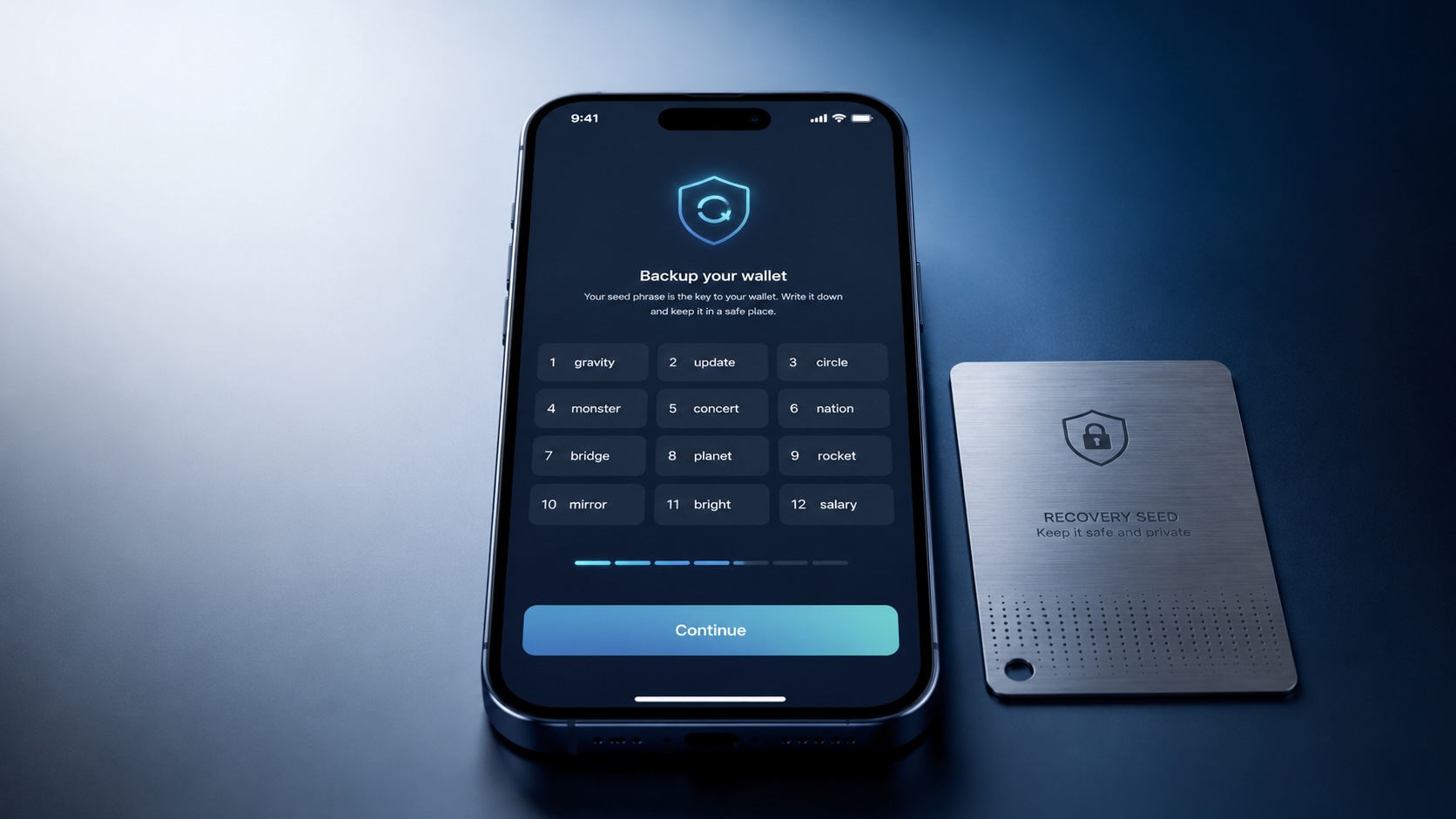
For example, when someone creates a self-custody wallet, the app may display a list of words and ask the user to write them down. Later, if the phone is lost or the app is deleted, the user can install a compatible wallet and enter the seed phrase. The wallet can then restore access to the same blockchain accounts.
This recovery function is the main reason seed phrases exist. Crypto assets are not stored inside the wallet app itself. They are recorded on blockchains. The wallet gives the user a way to manage those assets by holding or generating the keys needed to sign transactions. The seed phrase is the backup that allows those keys to be restored.
Because of this, a seed phrase should be treated like direct access to the wallet. It should never be shared with customer support, friends, online communities, or websites claiming to verify or secure funds. Legitimate wallet providers do not need a user’s seed phrase to provide support. If someone asks for it, that is almost always a scam.
A seed phrase is also different from a wallet password or PIN. A password may unlock the app on one device, while the seed phrase can restore the wallet on another device. Losing a password may be inconvenient. Losing a seed phrase can be final if there is no other recovery method.
How seed phrases are made
A crypto seed phrase is created through a process based on secure randomness and standardized word-list systems. When a wallet is generated, the wallet software creates random data, often called entropy. This randomness must be strong enough that no attacker can guess or reproduce it.
The random data is then converted into a sequence of words from a predefined list. Many wallets use widely recognized standards, such as BIP-39, which maps random numbers to words from a fixed word list. This makes the backup easier for humans to read, write, and verify compared with long strings of letters and numbers.
The words themselves are not chosen because they are special or meaningful. They are selected by the wallet generation process according to cryptographic rules. A phrase like this may look simple, but the number of possible combinations is so large that guessing a valid phrase connected to a real wallet is practically impossible when it is generated correctly.
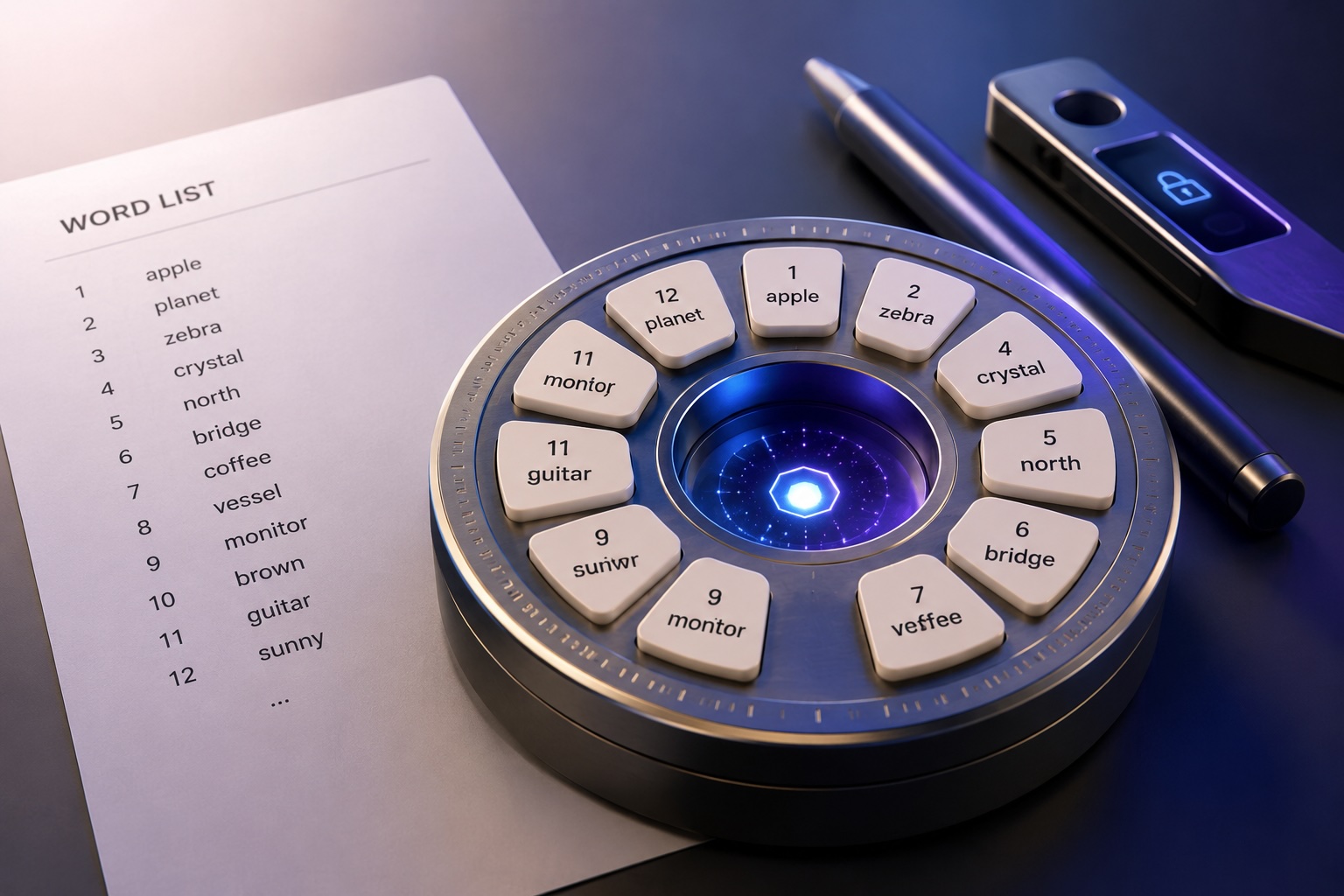
A typical 12-word phrase already represents a very large security space. A 24-word phrase offers even more possible combinations. However, the strength depends on proper generation. Seed phrases should be created only by trusted wallet software or hardware wallets using secure randomness. Users should not invent their own seed phrases, choose favorite words, or use online phrase generators.
Making your own phrase may feel safer, but it is usually much weaker. Humans are bad at creating true randomness. Patterns, favorite words, names, dates, and common phrases can make a wallet easier to attack. A properly generated seed phrase from a reputable wallet is much safer than one created manually.
Another important point is compatibility. Since many wallets use standard word-list systems, the same seed phrase can often be imported into different compatible wallets. This is useful if a wallet app stops working or a user wants to switch providers. However, compatibility also increases responsibility: if another app or website asks for the seed phrase, entering it may expose the entire wallet.
Some wallets also use an optional passphrase in addition to the seed phrase. This is sometimes called a “25th word,” although it does not have to be a single word. A passphrase can add another layer of protection, but it also creates another recovery requirement. If the passphrase is forgotten, the seed phrase alone may not restore the expected wallet.
In short, seed phrases are made through cryptographic randomness, converted into readable words, and used as the foundation for wallet recovery. Their simplicity is intentional, but the security behind them is highly technical.
Best practices for protecting your seed phrase
Knowing how to store crypto seed phrase backups safely is one of the most important habits in self-custody. The main rule is simple: keep the phrase offline, private, and protected from damage.
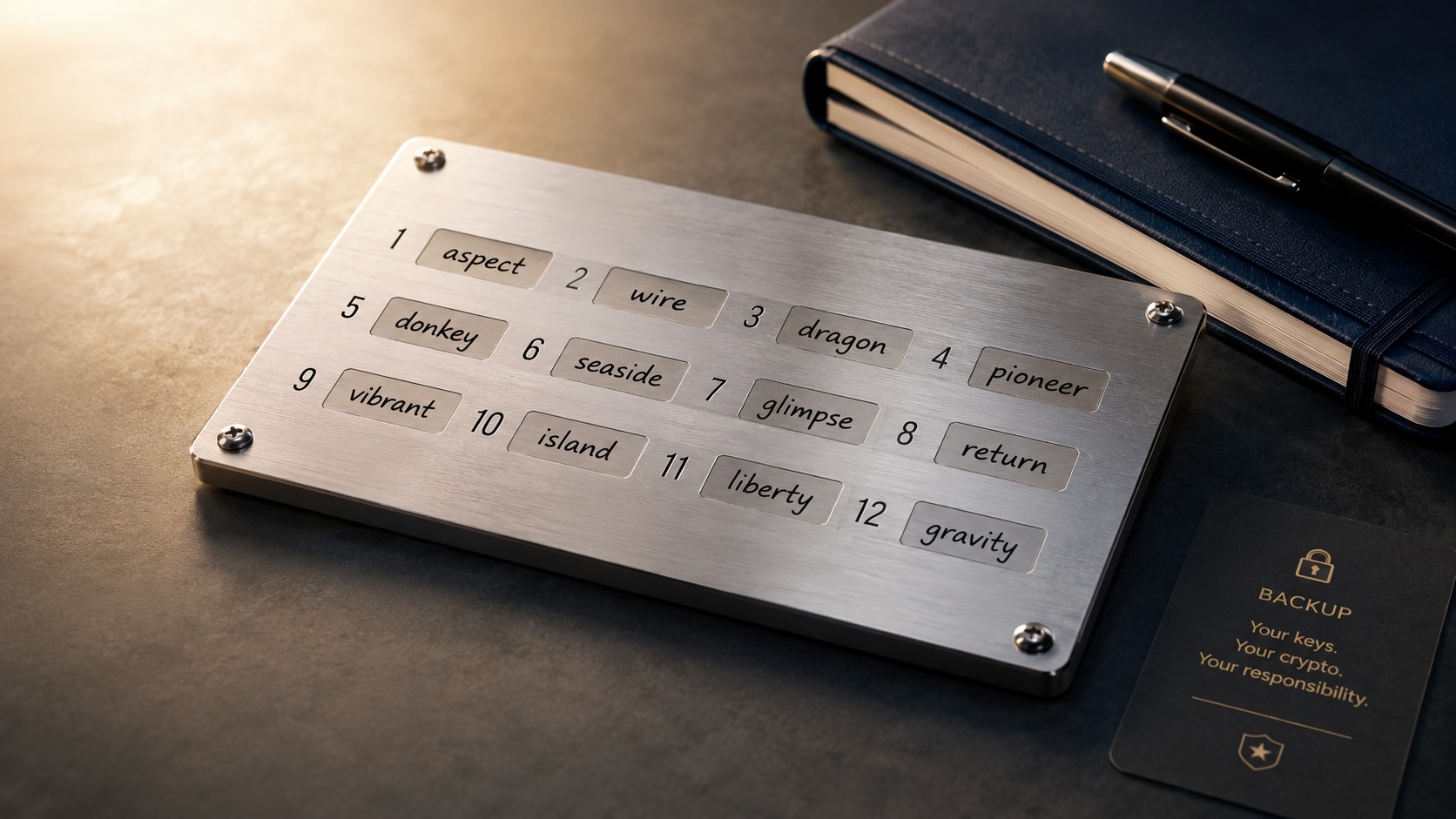
The safest basic method is to write the seed phrase on paper and store it in a secure location. Some users prefer metal backup plates because they are more resistant to fire, water, and physical decay. Paper is easy to use but vulnerable to moisture, tearing, fading, and accidental disposal.
A seed phrase should not be stored in cloud notes, email drafts, messaging apps, screenshots, photo galleries, or password managers unless the user fully understands the risks. Anything connected to the internet can potentially be hacked, synced, leaked, or accessed through malware. A screenshot of a seed phrase is especially risky because phones and computers often back up images automatically.
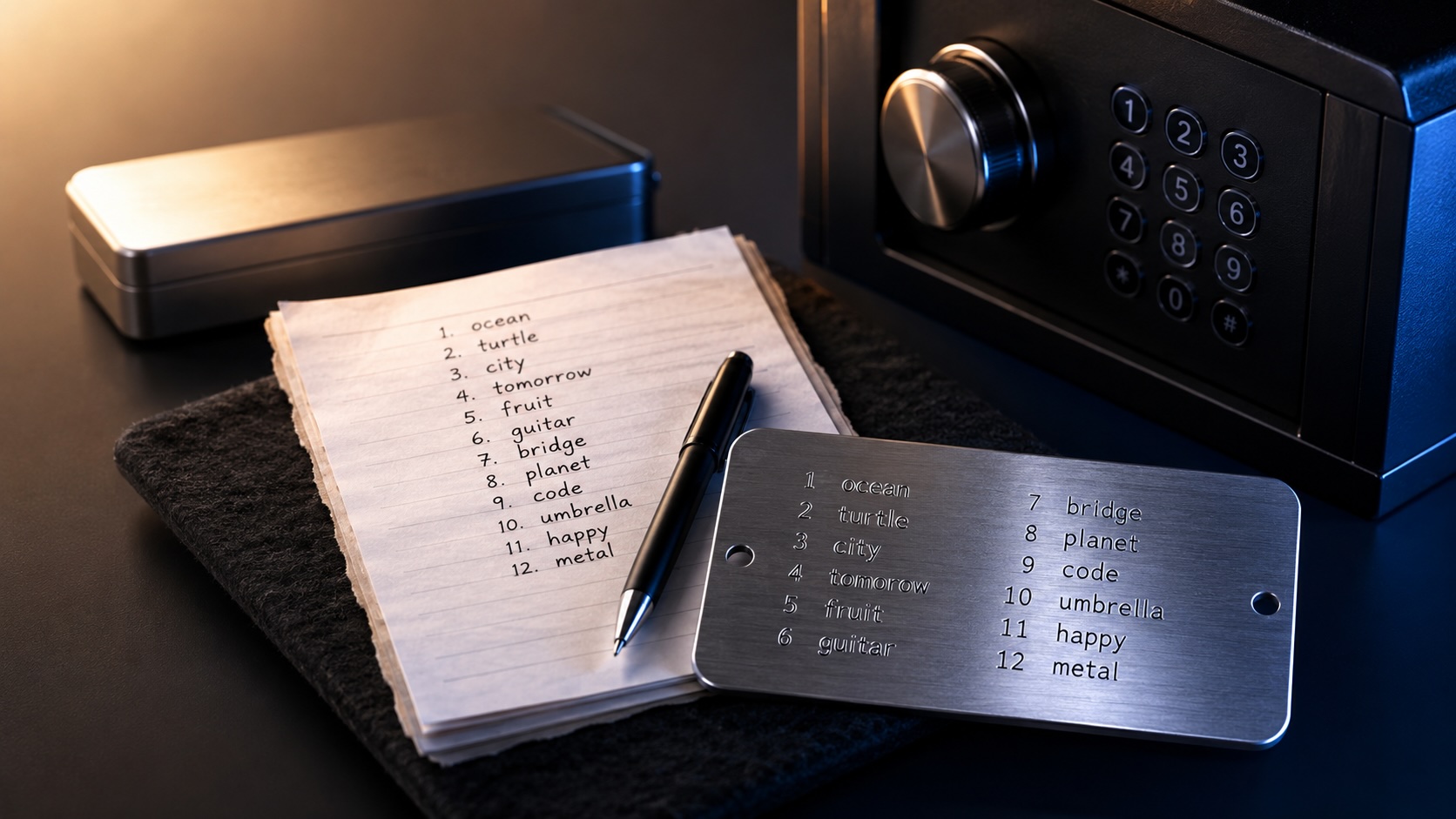
Another best practice is to make more than one backup, but not too many. One copy may be lost in a fire, flood, move, or accident. Several careless copies increase the risk of theft. A balanced approach is to keep backups in separate secure locations, such as a home safe and a bank deposit box, depending on the value of the assets and the user’s threat model.
The phrase should be written clearly and checked carefully. Since word order matters, numbering the words from 1 to 12 or 1 to 24 can help avoid mistakes. After writing it down, users should verify it during the wallet setup process if the wallet offers a confirmation step. Even one incorrect word can prevent recovery later.
The biggest seed phrase security mistakes usually come from convenience. People save the phrase digitally, send it to themselves, type it into fake recovery websites, or share it with someone pretending to be support staff. Scammers often create urgent situations, claiming that a wallet must be verified, upgraded, synchronized, or protected. Their goal is to make the user reveal the phrase.
Another common mistake is entering a seed phrase into an unknown app. Importing a phrase into a malicious wallet gives the attacker full access. Users should download wallet apps only from official sources and check that they are using the correct product. Fake wallet apps, phishing pages, and browser extensions are common attack methods.
It is also important not to expose the phrase during recovery. Enter it only in a private location, away from cameras, screen-sharing sessions, public Wi-Fi risks, and people nearby. Never read it aloud during calls or video meetings. Never paste it into a browser unless you are absolutely certain you are using a trusted wallet recovery flow — and even then, hardware wallets may offer safer recovery options.
For larger holdings, users may consider hardware wallets, multisignature wallets, or professional custody solutions. A hardware wallet keeps sensitive signing operations isolated from internet-connected devices. A multisignature setup can require more than one key to move funds, reducing the risk of a single seed phrase compromise. These options add complexity, but they may be useful for higher-value storage.
A crypto seed phrase gives users control, but control comes with responsibility. There is no bank reset button for most self-custody wallets. Protecting the phrase means protecting the assets. The best approach is to create the wallet with trusted software, back up the phrase offline, store it securely, avoid digital exposure, and never share it with anyone.
When handled correctly, a seed phrase is a powerful recovery tool. When handled carelessly, it becomes the easiest path for loss or theft. For anyone using crypto, learning how seed phrases work is not optional — it is the foundation of safe wallet management.
Articles by this author