
Permits, emissions and labor hobble U.S. AI data centers
Permitting delays, emissions caps and skilled-trades shortages are slowing AI data center builds across U.S. regions, forcing operators to change designs, extend timelines and seek new sites.
Permitting delays, emissions limits and a shortage of skilled trades are slowing construction of AI data centers across multiple U.S. regions. Operators are adjusting designs, extending timelines and looking for alternative sites and equipment as regulators, utility constraints and local opposition add layers to project approvals and buildouts.
Project developers identify permitting as the main bottleneck. Rob Laudati, chief product and partnership officer at Render Networks, described the approval path as ‘a fairly ugly picture’ and said the approvals stage is often the longest part of a project. Permits frequently require sign-off from several jurisdictions — local, county, state and private landowners — and cover zoning, power connections, water supply and environmental impacts such as air pollution and wildlife effects.
Air permits are a common choke point. Kaitlyn Bencosme, senior managing consultant in the air and climate group at Ramboll, explained that engineers first document combustion sources such as gas turbines and diesel storage, then submit those details to the local authority having jurisdiction. She added that most jurisdictions will not allow emissions-generating equipment to operate before permits are issued. Bencosme also warned that companies often overestimate what they can build in a location and must scale plans back to comply with local rules.
Developers face an additional hurdle in regions with scarce emissions offsets. According to Bencosme, finding offset credits in the Dallas–Fort Worth area is nearly impossible, leaving facilities that would exceed major source thresholds with no practical way to obtain required offsets. That lack of offsets can block additions of generation capacity intended to meet high uptime goals.
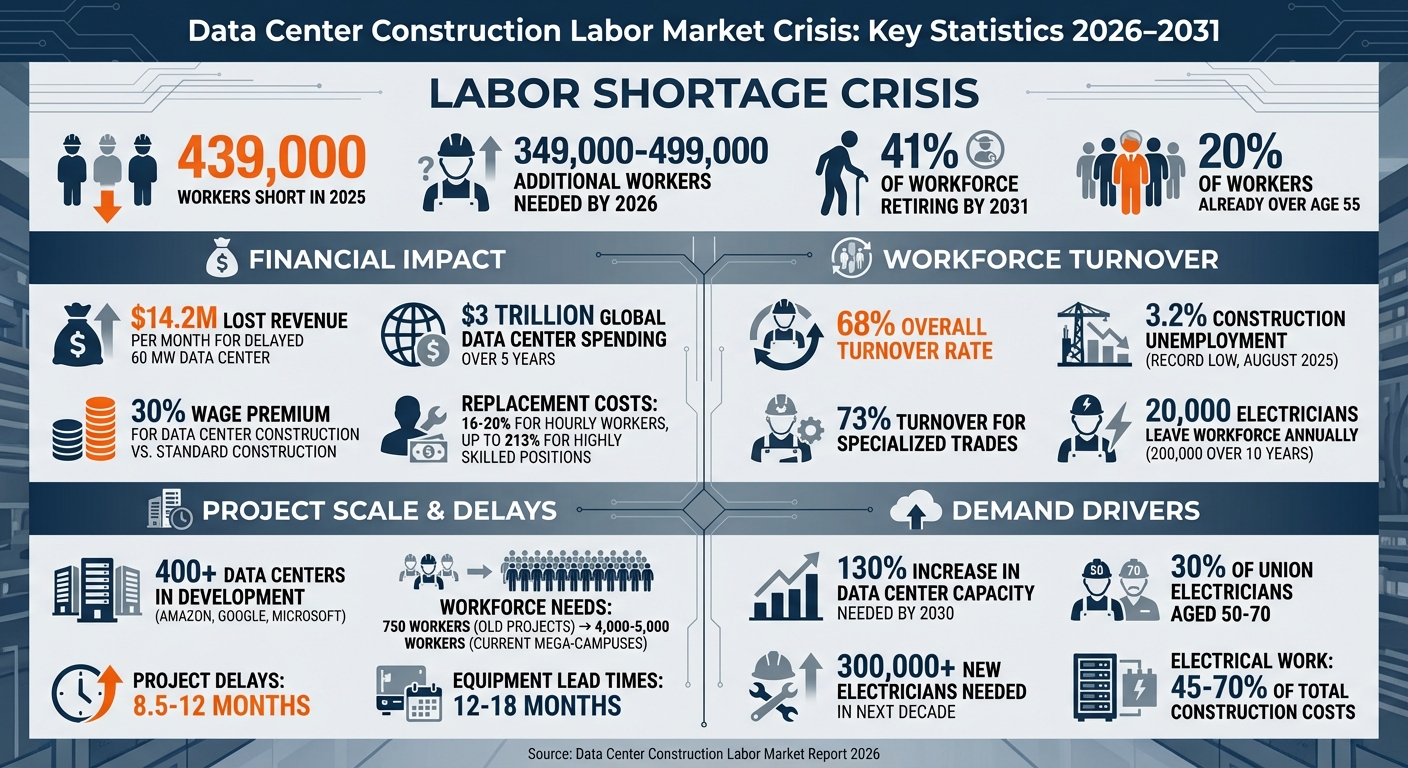
Labor constraints affect timetables as well. Tony Qorri, vice president of construction at DataBank, noted that while firms try to hire locally, subcontractor and trades availability is tight in markets such as Texas, Georgia and Northern Virginia. Projects in rural counties can face slower regulatory meetings and thinner labor pools, increasing scheduling risk.
Local concern about water use, power demand and air quality has increased. Developers report more public opposition and more frequent regulatory scrutiny, prompting expanded community engagement and education efforts. Qorri urged companies to present themselves as responsible operators during construction and ongoing operation.
Operators are testing technical changes to reduce footprints, including closed-loop liquid cooling, direct-to-chip systems and immersion cooling. A 2025 U.K. study found some data centers use less water than typical leisure centers, a comparison operators cite when discussing efficiency. Changes to cooling and power systems must be aligned with construction schedules and permit requirements.
Developers and consultants advise longer lead times, region-specific planning and early coordination with utilities and communities to reduce the risk of delays and redesigns.
Articles by this author









