Cardano Founder Warns Quantum Threat Likely Before 2033
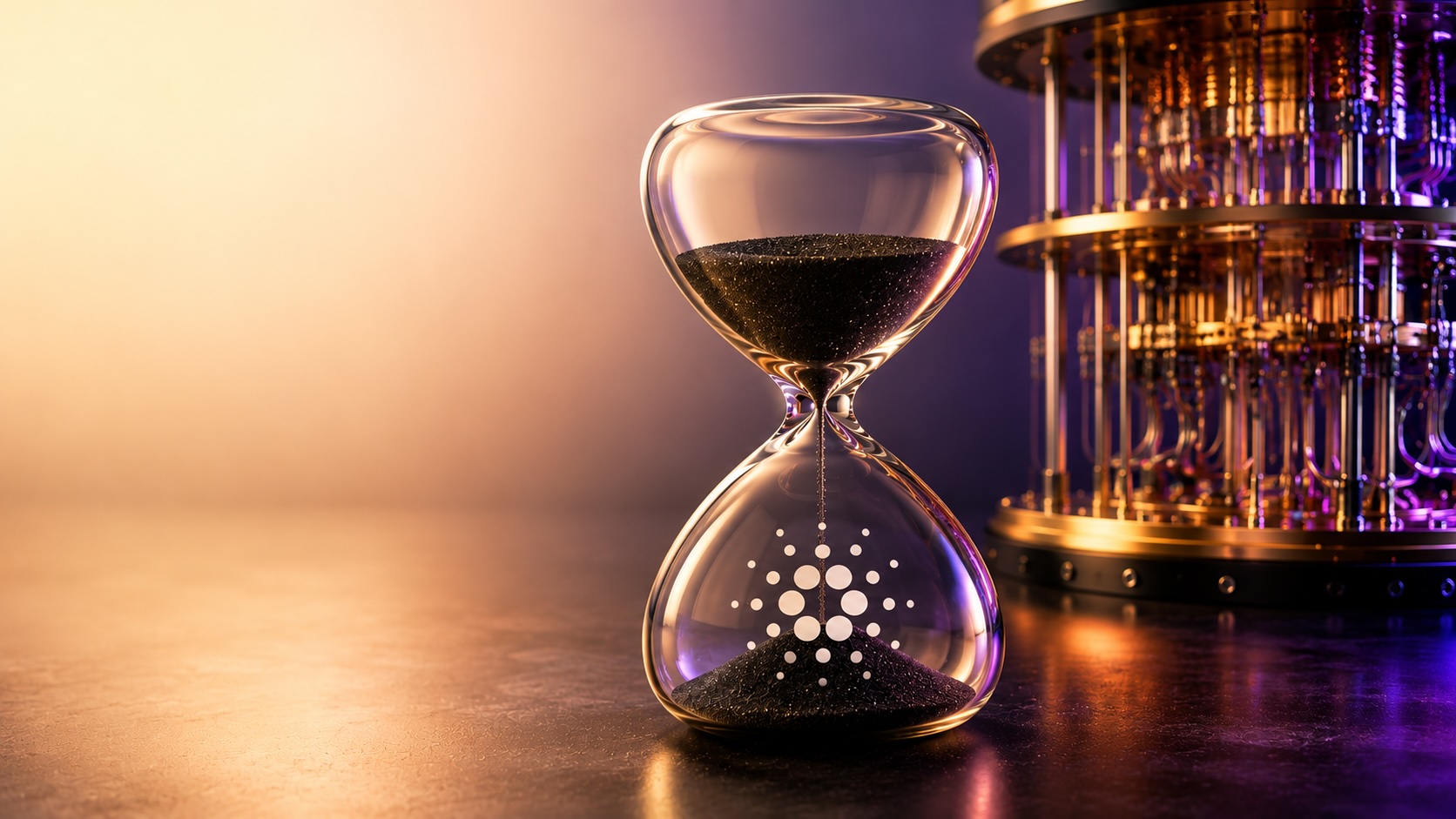
Cardano founder Charles Hoskinson warned at Consensus Miami there’s more than a 50% chance quantum computing will threaten crypto before 2033 and said Cardano will adopt lattice-based cryptography.
At Consensus Miami, Cardano founder Charles Hoskinson warned there is a greater than 50% chance quantum computing will pose a real threat to cryptocurrencies before 2033. He said Cardano is moving to lattice-based cryptography to prepare its core protocols for a post-quantum future.
Hoskinson framed the timeline as an engineering deadline and urged the industry to strengthen defenses now. He pointed to advances in neutral-atom quantum hardware and government-backed benchmarking programs, including DARPA’s Quantum Benchmarking Initiative, as factors that could accelerate the arrival of capable machines. He also flagged the risk of “harvest now, decrypt later” attacks that capture encrypted data today for decryption once quantum resources are available.
The technical concern centers on algorithms such as Shor’s algorithm, which can break elliptic-curve signatures used by most major blockchains if run on a sufficiently powerful, error-corrected quantum machine. Such a machine could derive private keys from public keys, forge signatures and disrupt consensus on decentralized ledgers. Bitcoin and other networks hold large amounts of coins in addresses that reveal public keys, which experts say could be vulnerable once relevant quantum hardware exists.
Cardano’s response focuses on lattice-based cryptography and hard mathematical problems such as Learning With Errors, which researchers consider resistant to both classical and quantum attacks. The team plans to adopt U.S. standards in NIST FIPS 203 through 206 and implement schemes including ML-KEM, ML-DSA, SLH-DSA and Falcon-style signatures. A research proposal on quantum resistance will be published and governance votes among Cardano stakeholders are already under way.
Other networks are testing post-quantum options. The Solana Foundation reported it consulted Project Eleven and deployed post-quantum signatures on a Solana testnet. Hoskinson contrasted Cardano’s governance process and scheduled hard forks with blockchains that may face greater coordination challenges when updating cryptography.
Haseeb Qureshi, managing partner at Dragonfly, estimated a median timeline of about ten years before modern public-key cryptography could be definitively broken, while noting outcomes are uncertain in either direction.
Market reaction was limited: Cardano’s ADA traded near $0.25 and was down about 5% on the week at the time of Hoskinson’s remarks.
Experts say the 2033 window depends on improvements in qubit counts, error correction and fault tolerance, which remain unresolved. Hoskinson closed by urging early planning and governance votes to reduce coordination burdens when protocol migrations are required, telling the audience, “Treat the timeline like an engineering deadline.”
Tags
Articles by this author